Technologies Used for Efficient Floor Removal
How Modern Equipment Delivers Clean, Fast Results
Ride-On Scrapers, HEPA Dust Capture & Slab Prep Explained
The technologies that make floor removal efficient today are ride-on floor scrapers, shrouded diamond grinders connected to HEPA vacuums, HEPA air scrubbers, sealed containment barriers and moisture testing tools. Together they remove old flooring significantly faster than hand tools, keep dust inside the work zone, and leave a slab or subfloor that’s ready for the next floor.
Advanced Flooring Removal (AFR) uses this equipment on every job across Northeast Florida. Below, we explain what each technology does, which floors it’s used on, and what to ask a contractor about their equipment before you hire them.
The Short Answer
Efficient floor removal relies on five technologies working together: ride-on scrapers for fast removal, shrouded grinders on HEPA vacuums for thinset and adhesive, HEPA air scrubbers for airborne dust, containment barriers to seal the work zone, and moisture testing before new flooring goes down. Used together, they let Advanced Flooring Removal capture up to 89% of dust at the source.
What Technologies Are Used for Efficient Floor Removal?
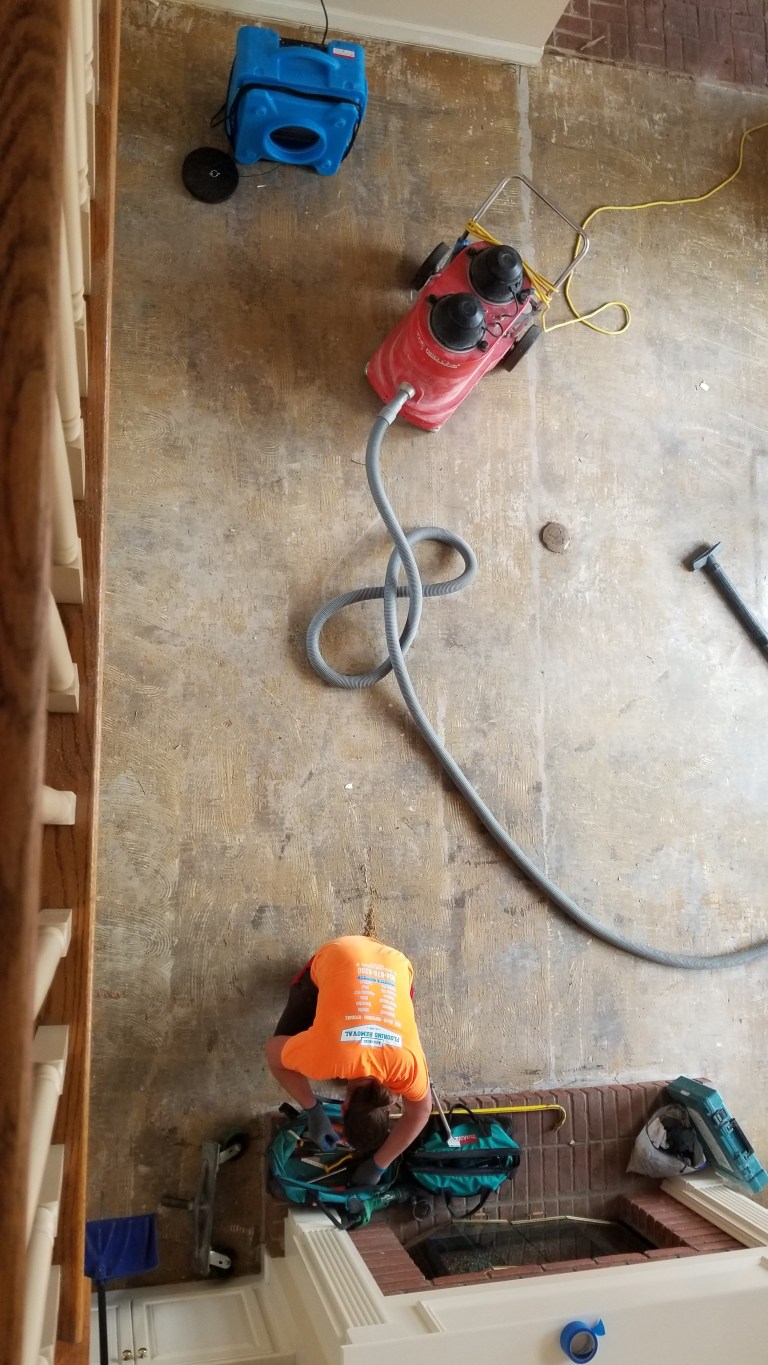
Professional floor removal pairs machines that do the heavy work with dust-control equipment that captures what those machines release. Neither half works well on its own. A fast machine without dust control spreads fine dust through the house, and a vacuum without the right removal machine turns a two-day job into a week.
Here is the equipment a modern removal crew brings, and what each piece is for:
| Technology | What it does | Used for |
|---|---|---|
| Ride-on floor scraper | Shears flooring off the slab with a wide, hardened blade | Tile, glue-down wood, LVP, sheet vinyl, VCT, glue-down carpet |
| Shrouded diamond grinder | Grinds thinset, adhesive and high spots flat; the shroud connects to a vacuum | Slab prep after tile or glue-down removal |
| HEPA dust extractor | Pulls dust from the tool at the point of contact | Every grinding and chipping task |
| HEPA air scrubber | Continuously filters the air inside the sealed work zone | Every occupied-home job |
| Containment barriers and zipper doors | Seal the work area off from the rest of the home | Every interior job |
| Moisture testing tools | Measure slab moisture before new flooring is installed | Concrete slabs before installation |
Ride-On Floor Scrapers: The Biggest Speed Gain
Ride-on floor scrapers are the single biggest reason modern floor removal is significantly faster than hand demolition. Instead of breaking flooring into pieces with chisels and hammers, the machine drives a wide blade under the floor covering and shears it off the slab.
AFR runs National 5700 ride-on scrapers. According to the National 5700DL product listing, the battery-powered machine runs on twelve AGM batteries, weighs about 2,400 pounds with its removable front section, and lets the operator adjust blade angle and pitch from the seat. That weight and blade control are what allow it to lift tile, glued hardwood and LVP cleanly instead of pulverizing everything.
Why a Ride-On Scraper Means a Cleaner Job
Speed is only half the benefit.
Dust-Capture Grinding for Thinset and Adhesive
After the flooring comes up, the slab is rarely ready for a new floor. Thinset ridges, old mastic and adhesive residue have to be ground off. This step creates the most fine dust, so it’s where dust capture matters most.
A shrouded diamond grinder encloses the grinding disc and connects to a HEPA dust extractor, so dust is pulled in at the point of contact. OSHA’s silica fact sheet for handheld grinders describes the same setup: a shroud designed for the grinder, a vacuum with at least 25 cubic feet per minute of airflow per inch of wheel, and a high-efficiency filter for respirable particles.
Grinding also sets the surface profile. Flooring and underlayment manufacturers specify how rough or smooth the concrete must be, using the International Concrete Repair Institute’s Concrete Surface Profile (CSP) scale, which runs from CSP 1 (nearly flat) to CSP 10 (very rough). Grinding to the profile the manufacturer calls for is what helps adhesives and self-levelers hold.
HEPA Air Scrubbers and Sealed Containment
Tool-mounted vacuums catch most dust, but not all of it. HEPA air scrubbers handle the rest by continuously pulling air from the sealed work zone through a HEPA filter.
Containment barriers, made of plastic sheeting with zipper doors, keep that air inside the work area. When the air scrubber exhausts filtered air out of the zone, the containment area stays at slightly lower pressure, so air flows into the work zone rather than out toward your living space.
HVAC returns in the work area are sealed, or the system is turned off during the dustiest stages, so fine dust isn’t pulled into your ductwork. Our guide on staying home during tile removal explains how this protects an occupied home, and our dust containment technical protocol walks through each step.
Floor Removal Technology by Flooring Type
Each floor type calls for a slightly different combination of equipment. Here’s how the technology matches the material:
| Flooring | Main removal tool | Slab or subfloor prep | Main challenge |
|---|---|---|---|
| Ceramic or porcelain tile (thinset) | Ride-on scraper | Shrouded grinding of leftover thinset | Fine dust from tile, grout and thinset |
| Mud-set tile | Ride-on scraper plus demolition hammer | Grinding and leveling | Thick mortar bed means more debris and time |
| Glue-down hardwood | Ride-on scraper | Adhesive grinding | Removing glue without damaging the slab |
| Nail-down hardwood over plywood | Scraper or hand tools | Subfloor inspection and plywood repair | Fasteners and damaged plywood |
| Glue-down LVP and sheet vinyl | Ride-on scraper | Adhesive removal | Older homes need asbestos testing first |
| Carpet and pad | Hand tools; scraper for glue-down carpet | Tack strip and staple removal | Bulk debris and haul-off |
Removal speed depends on both the material and the layout. Open, empty commercial spaces go much faster than occupied homes with tight rooms. Carpet and pad removal is free when Advanced Flooring Removal also installs your new floor. See our flooring removal cost guide for current pricing by material.
Testing Before New Flooring Goes Down
Efficient floor removal includes checking the slab before installation. Concrete slabs can hold moisture that causes adhesive failure, cupping in wood floors and problems under vinyl. Moisture testing tells the installer whether the slab needs a moisture mitigation product before the new floor goes in.
In older homes, the most important test happens before removal starts. Vinyl tile, sheet flooring backing and dark mastic adhesive in homes built before the 1980s can contain asbestos. The EPA says the only way to know is to have a qualified laboratory test a sample. If a test comes back positive, the work calls for a licensed abatement professional, not a standard removal crew.
What to Ask a Contractor About Their Floor Removal Equipment
The equipment a contractor brings decides how clean and how fast your project will be. Ask these questions before you hire anyone:
For the full checklist, see our 10 questions to ask before hiring a Florida flooring removal contractor. If you’re comparing local contractors, our guide to companies that specialize in dust-contained flooring removal in Florida explains what separates a specialist from a general demolition crew.
Conclusion
Efficient floor removal comes down to the right machine for the floor, dust capture at every tool, filtered air inside a sealed work zone, and testing before the new floor goes down. Skip any one of those and the job gets slower, dustier or more expensive to fix later.
Advanced Flooring Removal brings 20 years of industry experience and this full equipment setup to every job, and we’re licensed and insured. We serve homeowners and businesses across Duval, St. Johns, Clay, Nassau and Flagler counties and the St. Marys, GA area. Request your free quote and we’ll tell you exactly which equipment we’ll use on your floor.