
The Hidden Dangers of LVP on Wood Floors
Why Covering Is Never the Answer
The Science Behind Why Luxury Vinyl Plank Over Hardwood Always Fails in Florida
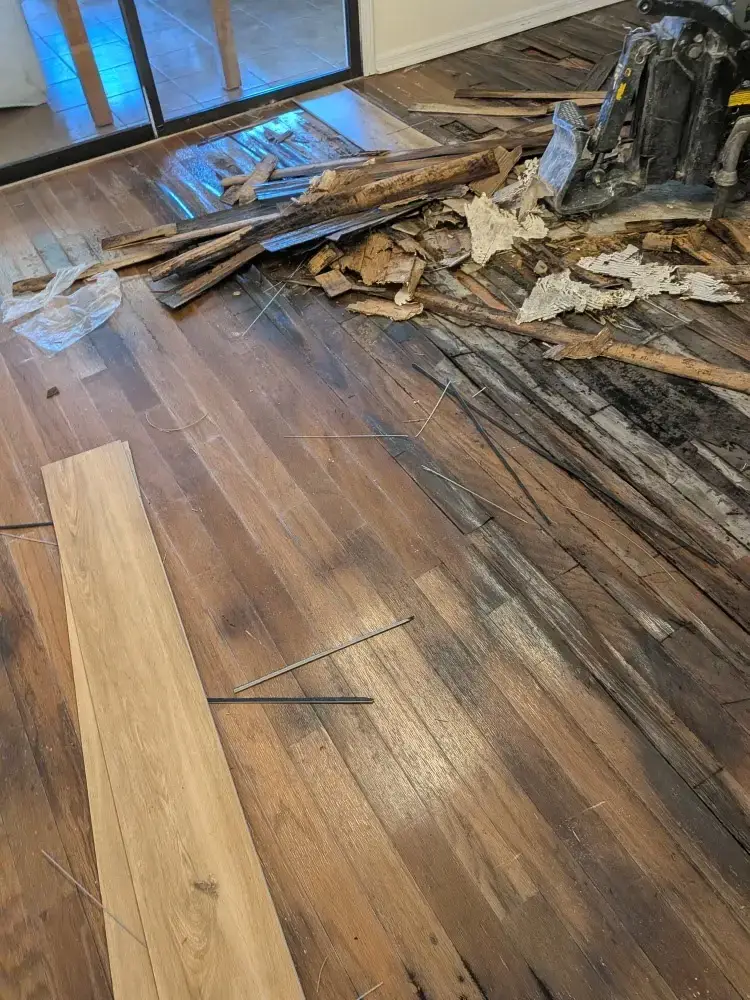
Evidence: The aftermath of vinyl installed over wood flooring.
Installing luxury vinyl plank on top of wood floors is one of the most damaging mistakes we see in modern home renovations. Homeowners often choose this route to save time on demolition, assuming that covering the old floor is a harmless shortcut.
As the photo above reveals, this decision leads to catastrophic failure. If you are thinking about laying LVP over existing hardwood, you need to understand the science behind what happens beneath the surface — especially in Florida’s high-humidity environment.
Why Luxury Vinyl Plank on Top of Wood Floors Always Fails
-
Wood Is Hygroscopic — It Needs to Breathe
As noted by the National Wood Flooring Association, wood is hygroscopic — it constantly absorbs and releases moisture from the surrounding environment. When you seal it under an impermeable layer, that natural process becomes destructive.
-
The “Suction Cup” Effect
Modern LVP is designed to be waterproof and typically includes a rubber backing. When layered over organic wood, this impermeable material creates a sealed micro-climate — trapping rising ground moisture between the two layers with nowhere to escape.
-
Mold, Bacteria & Health Hazards
The trapped moisture creates a dark, damp environment that is the perfect breeding ground for mold and bacteria. The EPA warns that hidden mold behind building materials poses serious respiratory health risks — especially dangerous for children and elderly residents.
-
Structural Decay & Joist Damage
Structurally, the wood begins to rot, swell, and buckle. You may hear crunching sounds or feel soft spots underfoot. These are clear signs it is time to replace your flooring immediately — before the damage reaches your home’s structural joists and becomes a far more expensive problem.
-
Florida’s Humidity Makes It Worse
In Northeast Florida’s climate, concrete slabs constantly emit ground moisture upward. Combined with seasonal humidity, the conditions beneath sealed LVP accelerate wood rot and mold growth significantly faster than in drier climates — making proper removal even more critical here than anywhere else.
The Solution: Removal, Not Cover-Up
The only safe way to upgrade your floors is a clean removal first — every time:
Putting luxury vinyl plank on top of wood floors might save a few hundred dollars today — but it routinely costs thousands in remediation, mold treatment, structural repair, and complete reinstallation later. Don’t risk your home’s health or your family’s safety. Use professional removal solutions to start with a clean, dry, solid foundation every time.
Frequently Asked Questions
Don’t Cover It Up
Remove It the Right Way
Protect your home, your family, and your flooring investment — start with a clean slab.
Advanced Flooring Removal — Jacksonville’s Gold Standard for Safe, Clean Subfloor Preparation.