Dustless Tile Removal in Jacksonville:
What It Really Means and What to Ask Before You Hire
Equipment, Costs, Silica Safety & Honest Expectations
Dustless tile removal is a marketing term for tile demolition that uses vacuum-connected tools, HEPA dust collection and sealed work areas to keep dust out of the rest of your home. It does not mean zero dust. Grinding tile and thinset off a concrete slab always releases some fine silica dust, so the real question is how much of it a company actually captures.
If you are comparing tile removal companies in Jacksonville, you will see “dustless” and “dust-free” everywhere. This guide explains what those claims usually mean, what the equipment does, what the work typically costs and the questions that separate a real containment process from a slogan.
The Short Answer
No tile removal process is truly 100% dust-free. “Dustless” tile removal means dust is captured at the source by HEPA vacuums and kept inside a sealed work zone. A good process captures most of the dust, not all of it. Ask any company what percentage they capture and how they measure it before you hire.
What Does “Dustless Tile Removal” Actually Mean?
“Dustless” tile removal describes a method, not a result. The company connects its chipping hammers, scrapers and grinders to high-powered HEPA vacuums so dust is pulled in at the point where it’s created, instead of floating through the house.
Traditional tile demolition uses hammers and chisels with no dust collection. That approach can coat every room, the air ducts and the furniture in fine gray powder. Dust-controlled methods were developed to stop that, and they work well. The problem is the word “dustless” itself, which promises more than any equipment can deliver.
| Term you’ll see | What it usually means | What to ask |
|---|---|---|
| “Dustless” or “dust-free” | HEPA vacuums attached to tools, plus some plastic sheeting | How much dust do you actually capture? |
| “Dust-contained” | Dust captured at the source and a sealed work zone to stop the rest from spreading | How do you seal the work zone and clean up? |
| Traditional demolition | Hand tools or power tools with no dust collection | Avoid this in an occupied home |
Is Dustless Tile Removal Really Dust-Free?
No. Every tile removal job releases some dust, because breaking tile and grinding thinset creates particles too fine for any tool shroud to catch completely. Some dust escapes when tiles snap, when debris is bagged and carried out and when the slab is swept.
That’s why AFR describes its process as dust-contained, not dust-free. Our process is up to 89% dust-contained, and we explain exactly how we get there. A company that promises zero dust is either using the word loosely or setting you up for disappointment. For the full story behind the term, read The Myth of “Dust-Free” Flooring Removal.
Why Tile Dust Matters: Silica in Florida Homes
Tile dust is more than a cleaning problem. Ceramic tile, porcelain, grout, thinset and the concrete slab underneath all contain crystalline silica. When they’re cut, broken or ground, they release respirable silica dust small enough to reach deep into the lungs.
OSHA regulates silica exposure on construction sites through its respirable crystalline silica standard, which requires dust controls such as water or vacuum collection for tasks like grinding and chipping. Those rules exist to protect workers, and the same dust is what you don’t want settling in your living room. Learn more in our guide to silica dust risks during flooring removal.
What Equipment Is Used for Dust-Controlled Tile Removal?
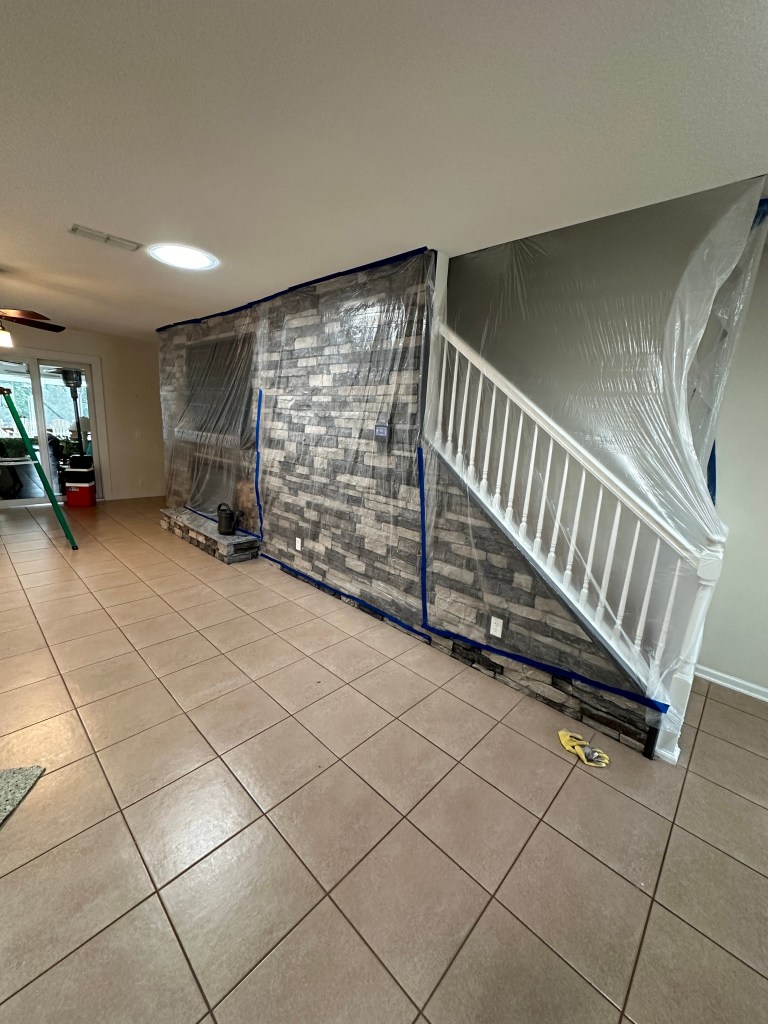
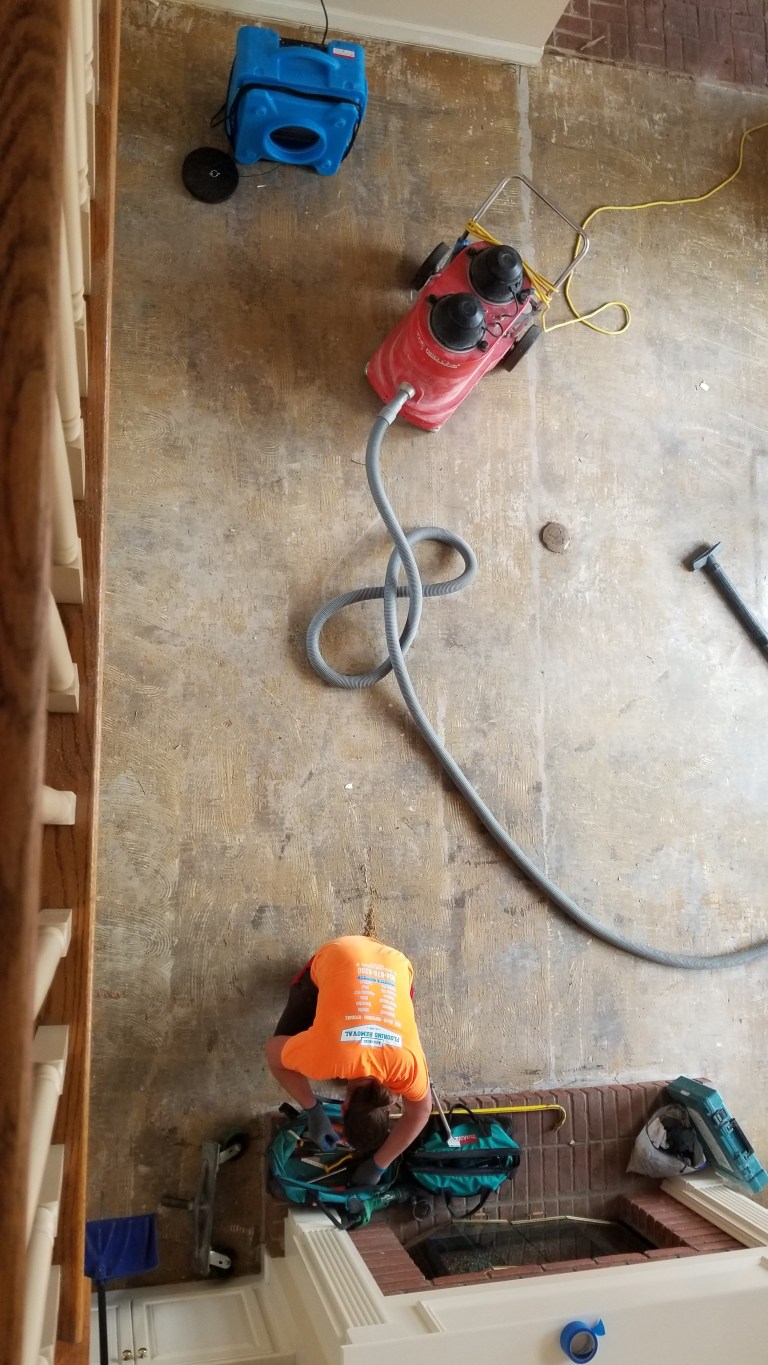
A dust-controlled tile job relies on three things working together: tools that collect dust at the source, vacuums with true HEPA filtration and physical barriers around the work area.
-
Shrouded tools and scrapers
Chipping hammers, floor scrapers and grinders fitted with shrouds that connect directly to a vacuum hose, so dust is pulled away as it forms.
-
HEPA dust extractors
Industrial vacuums with sealed HEPA filters that trap fine silica particles instead of blowing them back into the room.
-
Sealed work zone
Plastic barriers and zipper doors close off the work area, and HVAC returns in the zone are covered so dust isn’t pulled into your air system.
-
Protected path and cleanup
Floor protection along the route to the door, bagged debris and a HEPA vacuum cleanup at the end of the job.
AFR’s grinders and scrapers run on normal household outlets, so no special 220V power is needed. See how each step works on our dust management protocol page.
How Much Does Dustless Tile Removal Cost in Jacksonville?
Tile removal in Jacksonville typically runs about $2.00 to $4.50 per square foot for tile and thinset, with dust control included in a professional quote. Where your job lands in that range depends on the tile, the setting method and the conditions in your home.
AFR doesn’t price jobs from a flat per-square-foot chart. We quote each job based on what’s on site: whether the home is occupied or empty, whether there’s a dumpster on site or we haul debris away, and how easy the access is. Mud-set tile on a thick mortar bed takes longer than thin-set tile, and small bathrooms take longer per square foot than open living areas. For a full breakdown, see our flooring removal cost guide for Jacksonville.
7 Questions to Ask a “Dustless” Tile Removal Company
These questions separate a real containment process from a slogan.
Want the full hiring checklist? Read 10 Questions to Ask Before Hiring a Florida Flooring Removal Contractor.
The AFR Approach: Dust-Contained Tile Removal
AFR is a licensed and insured flooring removal and installation company based in Mandarin, with 20 years of industry experience. Our tile removal process is dust-contained: we seal the work zone, capture dust at the source with HEPA collection, protect the path out of your home and clean up before we leave. We tell you up front that it’s up to 89% dust-contained, because an honest number is more useful to you than a promise nobody can keep.
We remove ceramic, porcelain and mud-set tile and grind the thinset so your slab is ready for new flooring. AFR serves Duval, St. Johns, Clay, Nassau and Flagler counties and the St. Marys, GA area. Learn more about tile removal in Jacksonville, or call 904-878-8350 for a free quote.