How Long Does Flooring Removal Take?
A Room-by-Room Timeline
Bathrooms, Kitchens, Living Areas & Whole Homes
How long does flooring removal take? For most homes, a professional crew finishes in one to two days. A single bathroom can be done in a few hours, while a whole house of tile can take up to three days. The type of floor, what’s holding it down and the total square footage decide where your project falls.
This guide breaks the timeline down room by room so you can plan your new floor installation, your schedule and your household around removal day. You’ll also see what speeds a job up, what slows it down and how long to wait before your new floors go in.
The Short Answer
Most residential flooring removal takes one to two days. Bathrooms usually take a few hours to half a day, kitchens about half a day to a full day, and an open living area about a day. Whole-house tile removal usually runs one to three days. Mud-set tile, glue-down wood and multiple layers of old flooring add time.
How Long Does Flooring Removal Take, Room by Room?
Flooring removal time depends mostly on the size of the room and the type of floor. Small rooms with a lot of fixtures take longer per square foot than big open spaces, because the crew can’t use large equipment in tight areas.
The table below shows typical timelines for a professional crew removing tile on a concrete slab, the most common job in Northeast Florida homes. Carpet goes faster, and glue-down wood or mud-set tile go slower.
| Area | Typical size | Typical removal time | What affects it |
|---|---|---|---|
| Small bathroom | 40–80 sq ft | A few hours | Toilet, vanity and tight corners |
| Primary bathroom | 80–150 sq ft | Half a day | Shower curbs, tub surrounds, mud-set tile |
| Kitchen | 150–300 sq ft | Half a day to 1 day | Appliances, islands, cabinet toe kicks |
| Living or family room | 300–600 sq ft | About 1 day | Open space lets ride-on scrapers run fast |
| Bedroom (carpet) | 120–200 sq ft | 1–2 hours | Tack strip and staples; glued carpet takes longer |
| Whole house | 1,500–2,500 sq ft | 1–3 days | Floor type, layers, furniture and access |
These are typical ranges, not promises. Your quote will include a timeline based on your actual square footage and flooring. To see how size and floor type also affect price, read our guide to flooring removal cost in Jacksonville, FL.
How Long Flooring Removal Takes by Floor Type
The floor type changes the timeline more than anything else. Carpet comes up fastest, tile and glue-down wood take the longest, and the material underneath often matters more than the floor on top.
| Floor type | Relative speed | Why |
|---|---|---|
| Carpet and pad | Fastest | Cut, roll and remove; pull tack strip and staples |
| Floating LVP or laminate | Fast | Planks click apart with no adhesive on the slab |
| Nail-down hardwood | Moderate | Boards pry up, but every nail has to come out |
| Glue-down vinyl or LVP | Moderate to slow | The adhesive left on the slab is the hard part |
| Thinset tile | Moderate to slow | Tile, grout and thinset all have to come off |
| Glue-down hardwood | Slow | Boards break apart and glue must be ground off |
| Mud-set tile | Slowest | A thick mortar bed can roughly double tile removal time |
Mud-set tile is common in older homes in neighborhoods like San Marco, Riverside and parts of Mandarin. If your home was built several decades ago and the tile sits noticeably higher than the floors next to it, mention it when you request a quote so we can plan the right equipment.
What Happens on Removal Day: A Step-by-Step Timeline
A typical one-day flooring removal follows the same order every time: set up, remove, prepare the slab, clean up. Knowing the steps helps you plan your day and know when the house will be usable again.
-
Arrival and containment setup
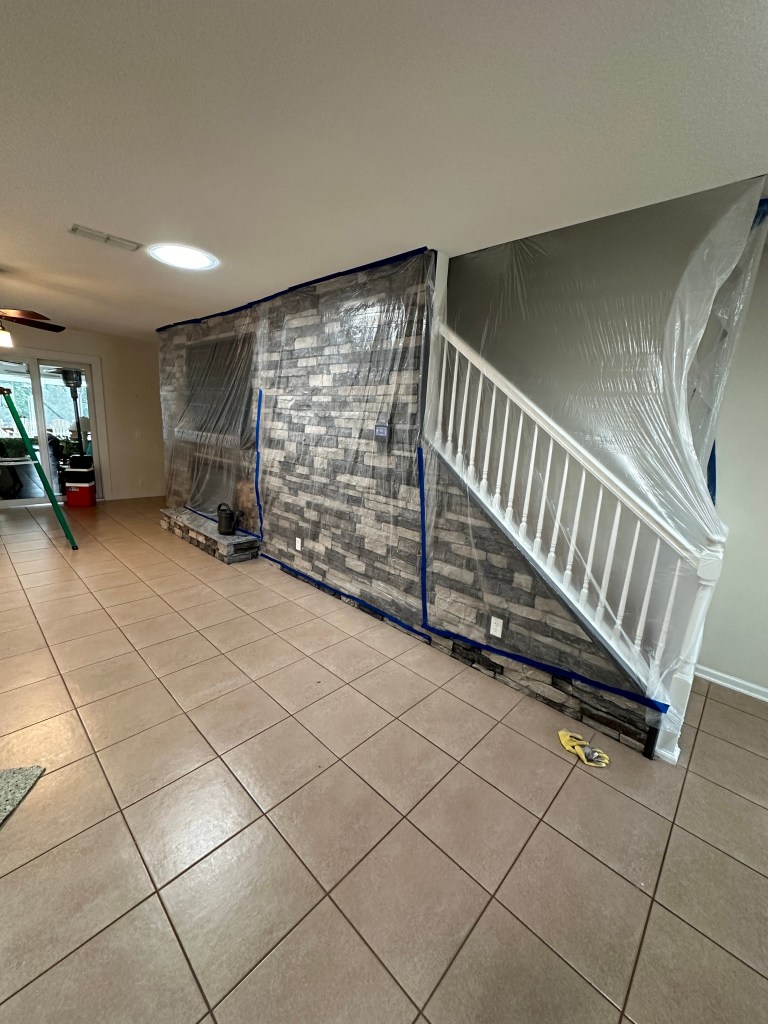
The crew walks the job with you, protects the path to the door and seals the work zone with plastic barriers. Setup usually takes about an hour.
-
Removal
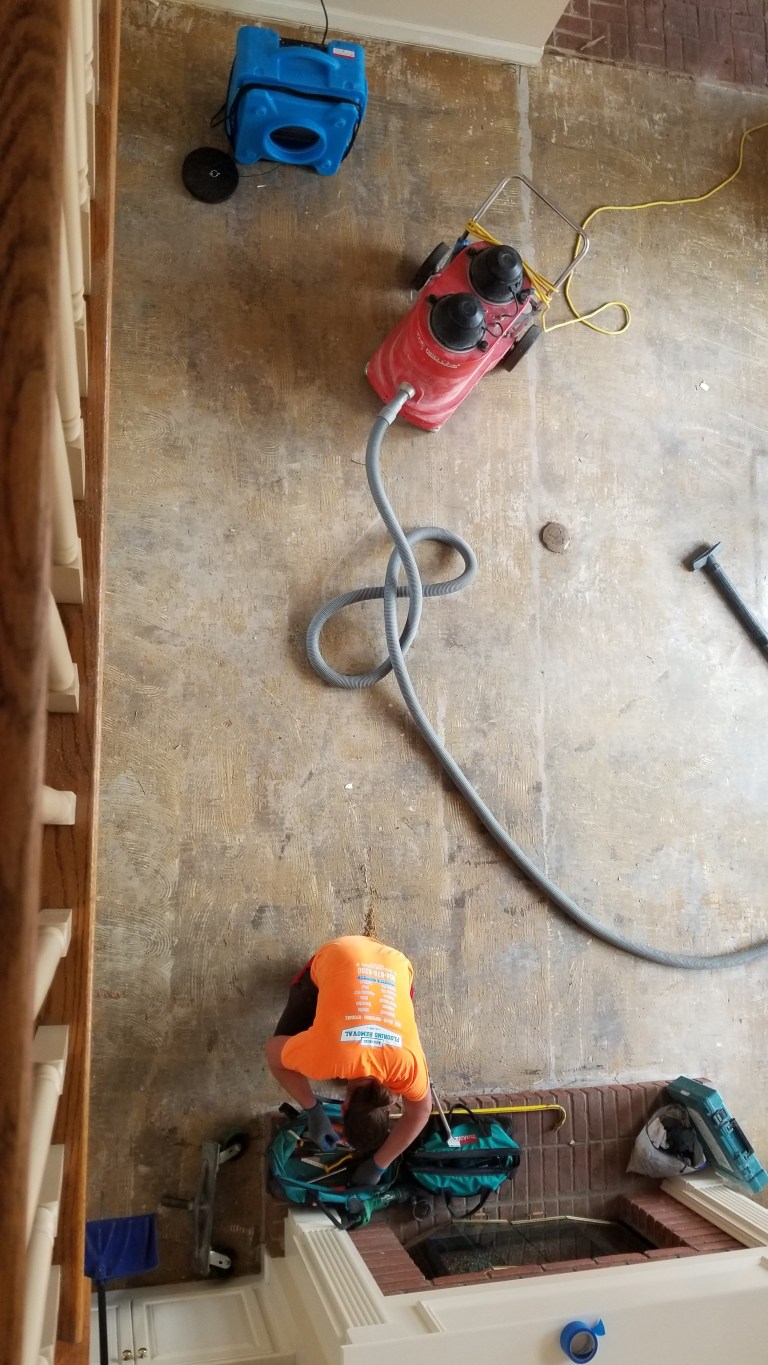
This is the longest step. Ride-on scrapers handle open areas, while hand tools and smaller equipment work around cabinets, toilets and doorways. HEPA dust collection runs throughout.
-
Debris haul-out
Broken tile, mortar and old flooring are carried out along the protected path as the work moves along, so the job site never piles up.
-
Slab preparation
Leftover thinset, mastic or glue is scraped or ground off so the concrete is ready for the next floor. Strong adhesives make this step longer.
-
HEPA cleanup and walkthrough
The crew HEPA-vacuums the slab and work area, takes down containment and walks the finished space with you.
Want to know if you can stay in the house while all this happens? Our guide on whether it’s safe to stay home during tile removal covers who should step out and how to prepare.
What Speeds Up or Slows Down Flooring Removal?
Equipment, preparation and what’s hidden under the floor make the biggest difference to how long flooring removal takes. Some of these factors are in your control and some aren’t.
What Keeps a Removal Job on Schedule
These are the factors that make the biggest difference to the timeline.
On the other side, these are the most common reasons a job runs longer than planned:
-
Mud-set tile or thick mortar
A heavy mortar bed takes much more breaking and hauling than thinset.
-
Multiple layers
Tile over vinyl, or vinyl over older vinyl, means removing each layer separately.
-
Stubborn adhesive
Glue-down floors often leave adhesive that has to be ground off before new floors can go in.
-
Possible asbestos in older homes
Vinyl tile, sheet vinyl backing and black mastic in older homes may contain asbestos. The EPA says the only way to know is lab testing, so build that time in before removal day.
Prep on your side makes a real difference. Our pre-arrival prep checklist shows exactly what to do the night before so the crew can start on time.
How Long After Removal Can New Flooring Be Installed?
New flooring can often go in the day after removal, but some floors need extra time. The slab has to be clean, flat and dry enough for the product you’ve chosen, and each manufacturer sets its own requirements.
Moisture is the main variable on Florida slabs. The common in-place test method, ASTM F2170, measures relative humidity inside the concrete with probes, and the current version allows readings after a 24-hour waiting period. Hardwood also needs the home’s conditions to be right before installation. The National Wood Flooring Association treats this as conditioning the jobsite rather than counting a set number of days, as Hardwood Floors magazine explains.
| Next floor | Typical gap after removal | What to check |
|---|---|---|
| Floating LVP or laminate | Often the next day | Flatness and the manufacturer’s moisture limit |
| Glue-down LVP | Next day or after testing | Moisture test and adhesive requirements |
| Tile | Next day in most cases | Clean, flat slab with no old thinset ridges |
| Hardwood or engineered wood | Depends on jobsite conditions | Moisture testing and indoor temperature and humidity |
For more on testing and moisture barriers, see our guide to moisture in concrete floors.
How to Plan Your Project Around the Removal Timeline
The easiest way to keep a flooring project on schedule is to book removal and installation as two separate, back-to-back steps. That gives everyone a clean handoff and a buffer if the slab needs extra preparation.
If AFR is installing your new floor, residential carpet, pad and tack strip removal is free with AFR installation, and removal and installation can be scheduled together. Learn more about our residential flooring removal services.
Conclusion
How long does flooring removal take? Most homes are done in one to two days, with bathrooms finished in a few hours and whole-house tile jobs taking up to three days. Mud-set tile, glue-down floors, multiple layers and moisture testing are what add time, and good preparation is what keeps a job on schedule.
AFR brings 20 years of industry experience to every job, and we’re licensed and insured. Every removal we do is dust-contained, capturing up to 89% of the dust it creates, and our pricing is the same in every county we serve across Duval, St. Johns, Clay, Nassau and Flagler counties and the St. Marys, GA area. Request your free quote and we’ll give you a clear timeline for your home.