Signs of Water Damage Under Flooring:
When Your Floors Need to Come Out
What to Check · What to Do First · When to Call
The most common signs of water damage under flooring are boards that cup or crown, soft or spongy spots, tile that sounds hollow or lifts, stains along baseboards and a musty smell that will not go away. In Florida’s humidity, a small leak under a floor can turn into a mold problem quickly, so these signs are worth acting on early.
This guide explains what each sign usually means, what to do first and when the damaged flooring needs to come out.
The Short Answer
If you see cupping, soft spots, loose or hollow-sounding tile, stains at the baseboards or a lingering musty smell, water may be trapped under your floor. Stop the source and get the area dried first. Flooring that stays wet, swells or smells musty usually has to be removed so the slab or subfloor can dry and be checked.
Signs of Water Damage Under Flooring, by Floor Type
Water shows up differently depending on what is on your floor. Use this table to match what you are seeing.
| Floor type | What you may see | What it usually means |
|---|---|---|
| Hardwood | Cupping (edges higher than centers), crowning, dark stains, gaps | Moisture is getting into the wood from below or from a leak |
| Engineered wood and laminate | Swelling at seams, peaking boards, a spongy feel | The core has absorbed water and will not flatten again |
| LVP and vinyl | Lifting edges, bubbles, adhesive failure, odor | Water is trapped under a surface that does not let it dry |
| Tile | Hollow sound when tapped, loose or cracked tiles, darkened grout | The bond has weakened or water is sitting under the tile |
| Carpet | Damp padding, staining, a persistent musty smell | The pad is holding water, which can lead to mold |
Other Warning Signs to Watch For
Not every sign is on the floor itself. These clues often point to water under the flooring too.
-
Musty or earthy smell
A smell that returns after cleaning often means moisture under the floor or behind baseboards.
-
Stains or swelling at the baseboards
Water wicks up into baseboards and drywall from a wet floor.
-
A higher water bill
An unexplained jump can point to a slow leak under a slab or behind a wall.
-
Recent leak, overflow or storm
Dishwashers, water heaters, toilets and roof leaks are common sources in Jacksonville homes.
What to Do First When You Find Water Damage
Stop the water source first, then get the area dried as quickly as possible. The EPA advises drying wet building materials within 24 to 48 hours to help prevent mold growth.
For active leaks or large amounts of water, call a plumber and a water mitigation company first. Their job is to stop and dry the water. Once the source is fixed, AFR removes the flooring that cannot be saved, so the slab or subfloor can dry fully and be checked before new floors go in.
When Water-Damaged Flooring Needs to Come Out
Some floors recover after drying, but many do not. Flooring usually needs to come out when any of these are true.
Signs the Floor Has to Be Removed
Removal lets the slab or subfloor dry and be checked.
How AFR Removes Water-Damaged Flooring
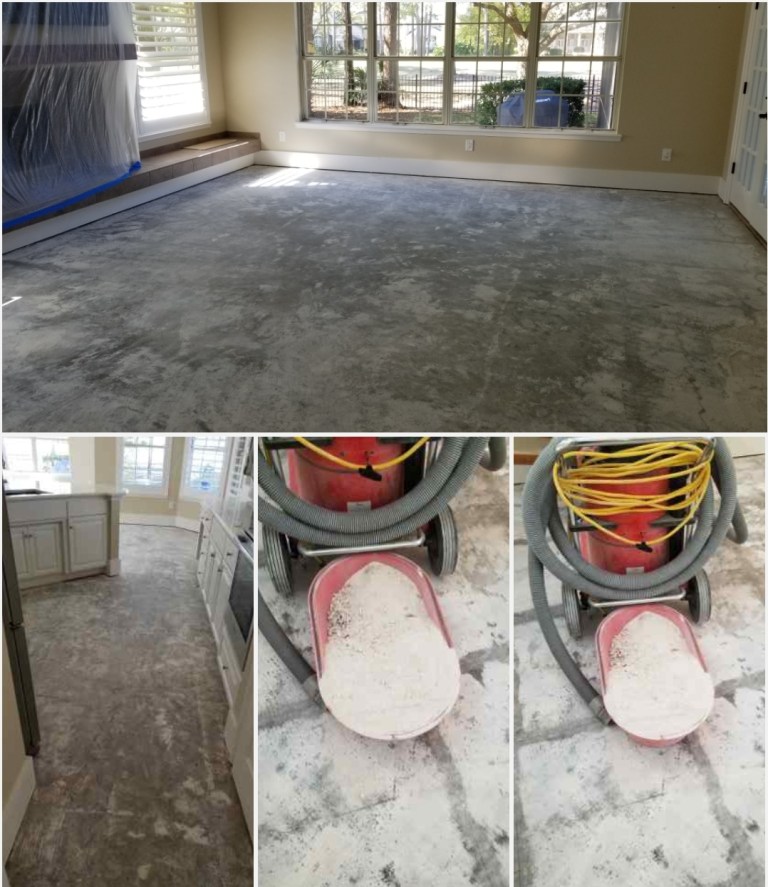
AFR removes damaged tile, hardwood, laminate, vinyl and carpet with the same dust-contained process we use on every job. We seal off the work zone, run HEPA air scrubbers and haul away all debris. Then we point out any subfloor damage or remaining moisture concerns so your repair and installation plan starts from solid ground.
We also repair or replace damaged plywood subfloors. For the full service, see our water damage flooring removal in Jacksonville page, and read moisture in concrete floors to understand what happens under a slab-on-grade home.
Frequently Asked Questions
Found Water Damage Under Your Floor?
Get a Free Removal Quote
Licensed & insured · 20 years industry experience · Up to 89% dust-contained